Robot Vacuum and Mop Combos Explained: What the Spec Sheet Numbers Mean
Suction in Pa, LiDAR vs 3D ToF, mop lift, roller vs spinning mops, threshold height and dock features: how to read a robot vacuum spec sheet.
Built from the product's official documentation, pricing and policy pages, not from our own hands-on use. How we review
How this guide was made. This is a documentation-based explainer. AITried has not tested any of the robots mentioned. Figures come from manufacturer product pages read on 19 October 2026, and we label them as manufacturer claims. Where we cite independent findings, we name the outlet and the date. Specs and prices change often, so check the official page before you buy.
Robot vacuum and mop combos now arrive with spec sheets that look like car brochures: 36,000 Pa, 3D ToF, 100°C dock washing, 8.8 cm obstacle crossing. Some of those numbers tell you a lot about how the robot will behave in your home. Others are mostly there to win a comparison table. This guide goes through each common line on a spec sheet, says what it measures, and explains what to check instead or as well.
The quick reference table
| Spec line | What it measures | How much it tells you | What to check alongside it |
|---|---|---|---|
| Suction (Pa) | Peak suction pressure claimed by the maker | Limited on its own | Independent pickup tests on carpet and hard floor |
| Navigation (LiDAR, 3D ToF, camera) | How the robot maps and locates itself | High | Reviews of mapping accuracy and corner coverage |
| Obstacle recognition (“300+ types”) | How many object classes the software is trained on | Medium | Independent obstacle course results |
| Threshold or obstacle crossing | Maximum step the robot can climb | High for homes with raised doorways | Single versus double-layer figures |
| Robot height | Clearance needed to go under furniture | High | Your sofa and bed clearance |
| Mop type | Spinning pads or a roller | High for mopping results | Independent stain tests |
| Mop lift height | How far mops rise on carpet | High if you have rugs | Your rug pile height |
| Dock features | What happens without you (emptying, washing, drying, refilling) | High for maintenance | Consumable costs and bag sizes |
| Battery (mAh) and runtime | Energy stored and claimed minutes | Medium | Area covered per charge in reviews |
Suction in pascals: the most quoted, least useful number
The pascal (Pa) is a unit of pressure. On a robot vacuum spec sheet it describes how strong a vacuum the motor can create, usually at its highest setting. Current flagship claims, as listed on official pages on 19 October 2026:
- Roborock Saros 20: 36,000 Pa.
- Dreame X60 Ultra: 35,000 Pa.
- eufy Omni S2: 30,000 Pa, which eufy’s Australian listing also gives as 100 airwatts.
- eufy Omni E28: 20,000 Pa.
The catch is that manufacturers do not publish a common method for measuring Pa. A figure taken at the motor, at maximum power, with nothing in the way, does not tell you how much grit leaves a carpet. Pickup also depends on brush design, how well the robot seals against the floor and how it paces each pass.
There is an international test method for robot cleaning performance: IEC/ASTM 62885-7:2020, which covers dry-cleaning robots for household use. According to its published scope, it defines how to measure performance (such as debris removal from hard floors and carpets) but sets no pass or fail levels. The European adoption also warns that its cleaning results should only be compared with other robots, not with manual vacuums. Independent testers who publish pickup percentages are a far better guide than a Pa number.
Rule of thumb: treat Pa as a sign of the motor tier (budget, mid-range or flagship), then let independent tests decide between robots in the same tier.
Navigation: LiDAR, 3D ToF and cameras
How the robot “sees” decides whether it cleans in neat lanes or wanders.
LiDAR turret
A small spinning laser on top scans the room in a full circle. It has been the standard for systematic mapping for years. The downside is height: the turret adds a bump that can stop the robot going under low furniture.
3D ToF without a turret
Time-of-flight sensors measure depth by timing reflected light across a field of view, with no spinning part. Roborock’s FAQ for the Saros 20 describes 3D ToF navigation with sensors at the front and rear-left, branded StarSight 2.0. eufy describes the Omni S2 as using “3D MatrixEye 2.0”, a 3D ToF system that it says detects obstacles over 1 cm. Dropping the turret is how both robots reach a body height under 8 cm.
Independent reporting suggests there is a trade-off. Dad Approved, in its Omni S2 review, said the turret-free navigation is a step behind spinning LiDAR in tight spaces and corners. That is one reviewer’s finding, but it is worth checking reviews of corner coverage if your home has many small rooms.
Cameras and obstacle recognition
Most flagships add an RGB camera so software can identify objects such as cables, socks and pet waste. Claims are given as a count of object types: Roborock lists over 300 for the Saros 20, Dreame lists 280+ for the X60 Ultra, and eufy’s Australian page lists 200+ for the Omni S2. These counts describe training categories, not how often the robot avoids things in practice. BGR’s July 2026 review noted that the Saros 20 initially tried to pick up cables before it adapted. Cameras also raise privacy questions, which deserve their own check of the brand’s privacy policy.
Threshold height and robot height
These two numbers often matter more than suction.
Threshold or obstacle crossing is the highest step the robot can climb. Brands often quote a “double-layer” figure (two stacked steps) that is higher than the single-step figure. Roborock lists up to 3.46 in (8.8 cm) for double-layer thresholds on the Saros 20. Dreame lists up to 8.8 cm for the X60 Ultra. eufy’s US page gives 4.2 cm double and 3.5 cm single for the Omni S2. A robot that cannot climb into a room simply cannot clean it, so measure your doorways.
Lab claims and reviews do not always line up. BGR’s reviewer found the Saros 20 sometimes needed two or three attempts at smaller bumps, even though it is rated for much taller ones.
Robot height sets what furniture it fits under. Roborock and Dreame both list about 7.95 cm. Measure the gap under your sofa and bed before you compare anything else.
Mops: pads versus rollers, and why lift height matters
Spinning pads
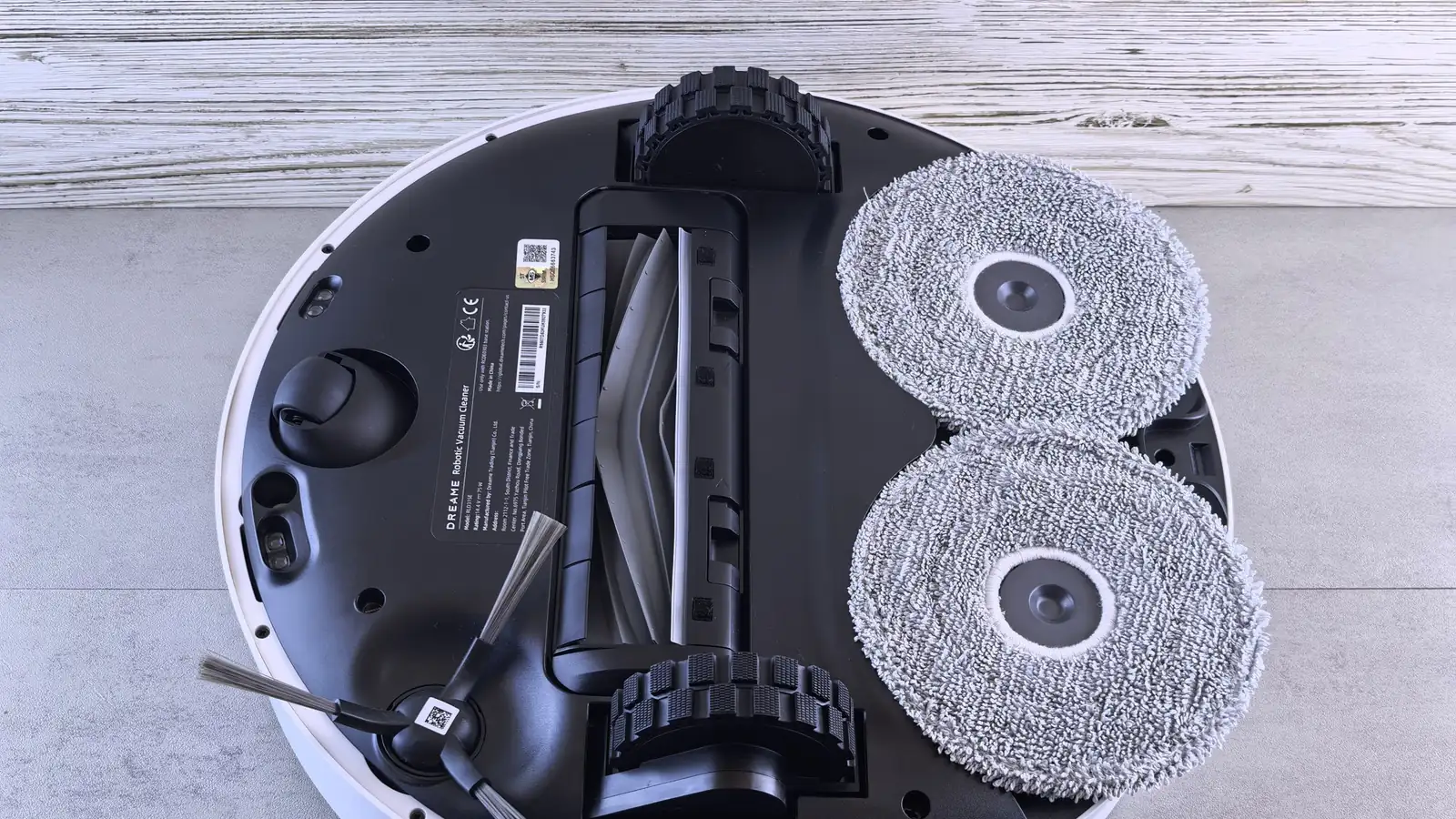
Two round pads rotate against the floor. The Saros 20 uses a rotating mop system with up to 13 N of downward pressure, according to Roborock’s FAQ. Some pad designs can swing out to reach edges.
Roller mops
A cylindrical roller is rinsed and scraped as it turns, so it is not pushing dirty water around. The eufy Omni S2 uses what eufy calls a self-cleaning roller mop with 15 N of downward pressure, and the Omni E28 uses a rolling mop at 180 RPM. T3’s May 2026 review of the Omni S2 said its mopping and stain removal were “as good as we’ve seen” on rival robots. BGR’s reviewer also said they prefer roller mops for the extra force.
Mop lift
When a combo robot meets carpet, it needs to raise or drop its mops. Look for a lift height in millimetres. eufy says the Omni S2 lifts its mop automatically on carpet and in vacuum-only mode, but the page we read did not give a height. If the figure is missing, check reviews that test the robot on a rug similar to yours.
The dock: where the real convenience lives
A self-maintaining dock is what turns a robot into something you rarely touch. Common features:
- Auto-emptying into a bag in the dock.
- Mop washing, often with hot water. Roborock lists hot-water washing up to 212°F (100°C) and warm-air drying at 131°F (55°C). Dreame lists 100°C self-cleaning and 40°C mopping water for the X60 Ultra.
- Auto refill and drain, either from built-in tanks or from optional plumbing kits.
- Detergent dispensing and, on some eufy docks, a fragrance dispenser.
Each feature saves effort, but also adds consumables. Price out replacement bags, filters, mop pads or rollers and cleaning solution before buying.
Battery and runtime
mAh figures describe battery capacity, and runtime claims are usually measured at the lowest suction with mopping off. Roborock lists a 6,400 mAh battery for the Saros 20. eufy’s EU page claims 180 minutes vacuum-only for the Omni E28, or 110 minutes vacuuming and mopping. Area covered per charge, as measured by reviewers, is a more useful number. Most current robots also recharge and resume, so runtime matters most in large homes.
A note for buyers importing from another market
Many readers import robots or buy from regional resellers rather than from the brand’s own store in their country. Three checks matter:
- Voltage and plug. Check the rating plate on the dock. A unit made for the US market may expect 120 V, while many countries run 220 to 240 V at 50 Hz, and you may need a plug adapter as well.
- Warranty. Roborock’s US warranty covers products sold within the United States, and eufy says its limited warranty is restricted to the country of purchase. An imported unit may have no local warranty cover at all.
- Consumables and parts. Bags, filters and rollers have to be shipped too. Confirm a reliable source before relying on a robot daily.
Bottom line
Read a robot vacuum spec sheet from the bottom up. Start with the numbers that decide whether the robot fits your home: robot height, threshold height and mop lift. Then look at navigation type and dock features, which decide how much attention it needs. Treat suction in Pa and object counts as manufacturer claims, and use independent tests to choose between flagships. For a side-by-side look at the current Roborock, Dreame and eufy flagships, see our spec comparison.
Frequently asked questions
Is a higher Pa number always better?
Not necessarily. Pa is a suction pressure figure the manufacturer reports, usually a peak value, and brands do not publish a shared test method for it. Brush design, airflow and how the robot moves all affect pickup. Independent tests are a better guide than the Pa figure alone.
What is the difference between LiDAR and 3D ToF navigation?
Both measure distance with light. A LiDAR turret spins on top of the robot and scans the room in a circle. 3D ToF (time of flight) sensors measure depth across a field of view without a spinning part, which lets some 2026 flagships drop the turret and sit lower. Several reviewers report turret LiDAR still has an edge in tight corners.
Do I need a mop that lifts?
If you have rugs or carpet, yes, or at least a mop that can be removed or detached automatically. Otherwise the robot either wets the carpet or has to skip it while mopping. Check the lift height in millimetres if the brand publishes it, and compare it with your rug pile.
Are roller mops better than spinning pads?
Some reviewers prefer rollers because they press harder and are rinsed continuously. BGR's Saros 20 review, for example, said the reviewer prefers roller mops. Spinning pads can extend to reach edges. Both designs appear on current flagships, so check independent stain tests for the specific model.
Can I use a US-bought robot vacuum in another country?
Check the dock first. A dock sold for the US market may be designed for 120 V, while many countries run 220 to 240 V at 50 Hz, so read the rating plate before buying rather than assuming the power supply will cope. Then remember that warranties from Roborock and eufy are tied to the country of purchase, so an imported unit may have no local cover.
What changed in this guide
- First published, built from official spec pages, the IEC/ASTM test standard listing and independent reviews read on 19 October 2026
Sources
Product details can change. These are the pages this article relies on, with the date each was checked.
- Roborock Saros 20 product page (Roborock US) (us.roborock.com) Accessed 19 October 2026
- Dreame X60 Ultra product page (Dreame US) (dreametech.com) Accessed 19 October 2026
- eufy Robot Vacuum Omni S2 product page (eufy US) (eufy.com) Accessed 19 October 2026
- eufy Robot Vacuum Omni S2 spec listing (eufy Australia) (eufy.com) Accessed 19 October 2026
- eufy Robot Vacuum Omni E28 product page (eufy EU) (release.eufy.com) Accessed 19 October 2026
- IEC/ASTM 62885-7:2020, Dry-cleaning robots for household use, methods for measuring the performance (IEC Webstore) (webstore.iec.ch) Accessed 19 October 2026
- Roborock Saros 20 review, José Adorno, BGR, 30 July 2026 (bgr.com) Accessed 19 October 2026
- Eufy Omni S2 Robot Vacuum review, Rob Clymo, T3, 12 May 2026 (t3.com) Accessed 19 October 2026
- Dreame X60 first look, Vacuum Wars, last updated 16 September 2026 (vacuumwars.com) Accessed 19 October 2026
- Eufy Omni S2 review, Dad Approved (justadadapproved.com) Accessed 19 October 2026
- Service and warranty (Roborock US) (us.roborock.com) Accessed 19 October 2026
- Warranty (eufy UK) (eufy.com) Accessed 19 October 2026